Recipe and Culinary Center

Rice pilaf

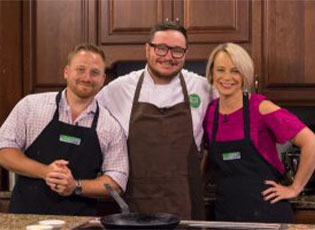
Chef Rob

Chef Rob Landolphi is on a quest to create and perfect gluten-free dishes that will appeal to every palate. To achieve that mission, he has written two cookbooks, Quick-Fix Gluten Free and Gluten Free Every Day, hosts culinary demonstrations and cooking classes, and is a consultant to restaurants and chefs who want to add gluten-free expertise to their operations. Chef Rob is a recognized expert in gluten-free menu development, staff education and training, recipe execution, and quality assurance and safe food handling practices. Read more about how Chef Rob relies on U.S.-grown rice to create a variety of gluten-free dishes that are healthy and flavorful.

Chef Rob's Professional Bio
Graduate of Johnson & Wales University (1991)
Culinary Arts Professor & Development Manager (University of Connecticut)
Association Memberships: The National Association of College and University Food Services, American Culinary Federation, Slow Food International & National Restaurant Association. 


As a gluten-free expert, why are more restaurants offering gluten-free menu selections?
It's due to increased demand and competition. The restaurant industry is a field where operations come and go on an almost yearly basis. Establishments need to change with the times and meet the evolving demands of the customers. Doctors are diagnosing patients with Celiac disease more frequently, and there are a lot more resources available for people to educate themselves on the benefits of a gluten-free diet. Back in the 1960s and '70s, people began demanding vegetarian dishes, and today those options continue to appear on most restaurant menus. I think we are going to see even more exciting, creative gluten-free menus popping up throughout the country on a fairly regular basis.
How has increased Celiac awareness and gluten-free dining shaped your food philosophy?
When creating, building and designing menus for restaurants, I feel it is my responsibility to offer as many gluten-free offerings as possible. In many cases this is not a diet of personal choice, but an essential component of a diet, based upon a medical need. I have also seen people who are not diagnosed with Celiac disease choose to eat gluten-free, simply because they find the diet gives them more energy and helps them feel better.
What have you learned during your mission to "create and perfect gluten-free recipes" that appeal to the masses?
I've learned that people who embrace a gluten-free diet are looking for healthy, tasty, gluten-free dishes that appeal to anyone. In order to please everyone with one meal, a person must learn the nuances of gluten-free cuisine. This is especially true with respect to the art of blending gluten-free flours correctly for baked goods. It is essential to not have an aftertaste in the finished product. One also has to find innovative ways to coat and bind ingredients, since wheat and gluten products are no longer an option for breading. Pulling together sides, sauces, appetizers and desserts is necessary to round out a good meal for everyone.
Rice is naturally gluten-free, so what role does it play in your mission, teaching and philosophy?
Embracing a gluten-free life also means embracing a lot of rice. Replacing wheat is a main objective in gluten-free cooking, so rice—white rice, brown rice, black rice, sweet rice—will be a popular ingredient in many recipes. Rice is also a staple in the flours used for baked goods and in many gluten-free pastas, cereals and crackers. As a healthy side dish, rice is a good source of complex carbohydrates and brown rice has the additional nutritional value of fiber content.
Share with us a couple innovative ways rice is incorporated into your gluten-free dishes?
Rice flour blended with eggs, gluten-free beer and seasonings make a great batter for onion rings or fish fillets. Cooked brown or white rice blended with beans and your favorite vegetables, herbs and spices can also make amazing veggie burgers.
When teaching about gluten-free cooking, what do people find most surprising?
People are generally surprised at how delicious and healthy a gluten-free diet can be. Most people's opinion of gluten-free products is based on one or two bad experiences or a poor, store-bought item they tried in the past. When people eat a piece of freshly buttered honey flax bread, a crispy coconut onion ring or a hunk of chocolate lava cake, they come to realize it won’t be as hard to give up gluten as they thought.
What advice do you have for chefs about embracing gluten-free cooking?
Always make sure that all the ingredients you are using are in fact gluten-free, and certified whenever possible. When testing recipes, don't be afraid to try new ingredient combinations and to expect that some will come out great and others will fail. It is important to understand that cooking gluten-free is an entirely different process than anything you have cooked before.  

Learn the steps to have a gluten-free kitchen & menu.

What are the other culinary benefits of using U.S.-grown rice?
I am a firm believer that as a chef, it is my responsibility to support local agriculture and to know where my food comes from. Knowing that rice is grown, produced and packaged in the United States is important. Having access to local companies that can answer questions about their farming techniques and practices, exact nutritional values and safety is key. Using U.S.-grown and locally grown rice also provides a great opportunity for marketing that aspect on restaurant menus and sharing with customers the type of rice and where it comes from.
If a chef is interested in adding gluten-free options to the menu, what types of dishes do you recommend for a beginner?
It depends on the menu being created.
  • Latin Menu: offer Arroz con Gandules (rice and beans) or Arroz con Pollo (rice and chicken).
  • Italian Menu: make a risotto bar with choices such as wild mushrooms, grilled asparagus, butternut squash, chicken and shrimp.
  • Asian Menu: suggest Kimchi Fried Rice or Nigiri Balls (sushi rice balls).
  • Dessert Menu: try a classic rice pudding that can be customized with an assortment of flavors. Offer topping options for added texture and flavor.
That's the wonderful thing about rice; it is very versatile and can be used in so many dishes from cultures around the world.
If you could build the perfect gluten-free dish—starting with rice, what else would you add?
One of my all-time favorite rice dishes is Paella. Rice blended with Chorizo sausage, shrimp, mussels, chicken, onions, red and green peppers, peas and an array of spices such as saffron, paprika and cayenne pepper. It makes a colorful, interactive dish and is always a crowd-pleaser when it is presented at the dinner table.

Check out this month's featured gluten-free recipes.